


 Smriti Gupta
 15 Oct-2025
 Lifestyle & Productivity
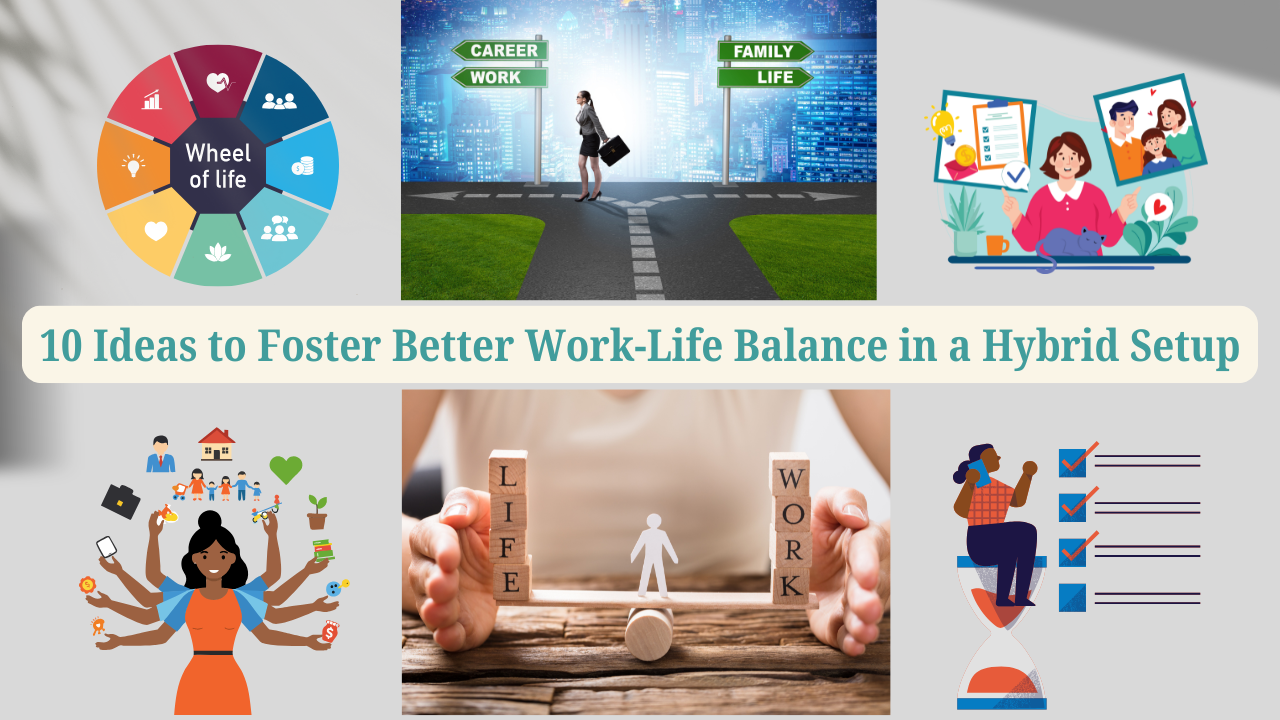
Hybrid setups, which combine office presence and remote work, are becoming commonplace in today's changing workplace. Although this paradigm allows for flexibility, it also poses particular difficulties in terms of time management, productivity, and personal life. Achieving a healthy hybrid work-life balance requires the development of effective techniques.
Several companies have embraced the hybrid work paradigm, in which employees alternate between working in the office and working remotely. Although this arrangement is convenient and flexible, it also exhibits novel challenges. It can be more difficult than imagined to manage your time, stay in touch, and keep business and personal life separate.
In a completely remote environment, isolation is a common problem. In an office-only environment, they have to deal with strict schedules and lengthy commutes. The two can be balanced with hybrid work, but it takes deliberate effort to achieve this equilibrium. In hybrid settings, employees may suffer from burnout, decreased productivity from home, and deteriorating wellness if there are unclear boundaries.
So, how can you establish a routine that is both healthy and sustainable for your personal and professional life? Let's look at 10 feasible approaches to assist you in succeeding in a hybrid environment.
1. Establish Specific Work Boundaries: It becomes easy for work hours to overlap with personal time when working in a mixed environment, particularly if your workspace is close by. Establish clear working hours and let your staff know about them in order to preserve equilibrium. After hours, refrain from checking work-related emails or messages. After your day is over, log out of work platforms or use the "Do Not Disturb" settings.
Treat your home office like a real office and begin and end your day in a regular manner for success with hybrid work.
2. Build a Specific Work Area at Home: Focus and productivity can be significantly impacted by a neat workstation. Set up a distinct space for work, preferably one that is free from distractions. Set up a space with a desk, chair, and adequate lighting, even if your apartment is small.
This keeps personal spaces free for relaxation while enhancing work-from-home productivity by helping your brain link that area with productivity.
3. Give time management and task planning top priority: Managing both office and remote work requires careful task planning. Set aside your workdays for meetings, brainstorming, and teamwork. Save your deep, concentrated work for days when you can be at home and have fewer distractions.
To keep track of your priorities and prevent scheduling overload, use productivity apps like Trello, Asana, or Google Calendar.
4. Adopt "Digital Detachment" After Work: After work, disconnect digitally. Take a break from screens for at least an hour and turn off notifications. Take part in offline pursuits like cooking, walking, reading, and family time.
In hybrid settings, this easy step prevents digital weariness and burnout while safeguarding your mental health and fostering workforce wellness.
5. Plan Frequent Movements and Breaks: Long workdays without breaks cause fatigue and a decline in inventiveness. Breaks in hybrid work sometimes go unnoticed. Use the Pomodoro technique, which involves working for 25 minutes and taking a 5-minute break, or plan brief breaks in between meetings. Stretch, go on quick walks, or engage in brief mindfulness exercises. Restoring your energy, focusing better, and elevating your mood are all facilitated by physical activity, which is essential for preserving a hybrid work-life balance.
6. Have Open Channels of Communication with Your Group: Miscommunication is a common occurrence in a hybrid arrangement. Instead of communicating too little, communicate too much. Let your colleagues know your availability, working hours, and expectations.
Whether working remotely or in person, make sure that everyone feels equally engaged in discussions and decision-making by making good use of collaboration platforms like Slack, Teams, or Zoom. Plan frequent virtual stand-ups or check-ins to keep communication open and clear.
7. Create an "In-Office Routine: If not planned, office days can feel frantic. Establish a deliberate in-office routine rather than racing between meetings or making up lost work.
Make use of your office days for activities that are enhanced by in-person communication, such as social engagement, team brainstorming, and mentoring. This lessens the loneliness that frequently accompanies working remotely by encouraging cooperation and enhancing relationships.
8. Pay Attention to Wellness and Health Practices: It takes more than simply time management to lead a balanced existence. Make your physical and mental well-being a priority by adopting small, regular routines, such as eating a healthy diet, drinking plenty of water, getting enough sleep, and exercising frequently.
Employers might encourage employee well-being under hybrid arrangements by providing mental health assistance, gym reimbursements, or wellness initiatives. Better productivity and enjoyment at work and at home are fueled by a healthy body and mind.
9. Make Use of Technology Wisely, Not Overly: Although technology enables hybrid work, it can also make it difficult to distinguish between work and leisure. Use digital technologies with awareness. Establish meeting-free days, automate repetitive work, and, when practical, use asynchronous communication.
10. Regularly reflect and reevaluate: Work-life balance changes throughout time. Six months from now, what suits you now could not work for you. Every few weeks, set aside some time to consider your workload, stress levels, and level of satisfaction.
Consider this: Do I spend enough time with my family? Do I feel energized or drained by my existing routine?
Make adjustments if something seems strange. Talk to your company about your choices for flexibility or try out some fresh habits. Continuous improvement, not perfection, is the aim.
Individual efforts are vital, but business culture has a significant impact on long-term hybrid work-life balance. Employers have a significant influence on how workers perceive boundaries and flexibility.
Businesses can guarantee that workers feel encouraged and involved wherever they work by fostering a culture that prioritizes both productivity and personal health.
Our lives and work have changed as a result of the transition to hybrid work, which presents both new problems and flexibility. Working smarter and leading a better life are more important than working less to achieve a hybrid work-life balance.
Employees can succeed in this new paradigm by emphasizing wellness, managing their time properly, establishing clear limits, and encouraging open communication. Likewise, companies that make investments in wellness, trust, and flexibility will experience improved morale, long-term retention, and increased productivity from home.
When done well, hybrid employment may strike the ideal balance between professional advancement and personal fulfillment, as it's here to stay.