


 Smriti Gupta
 20 May-2026
 HR & Recruitment Technology
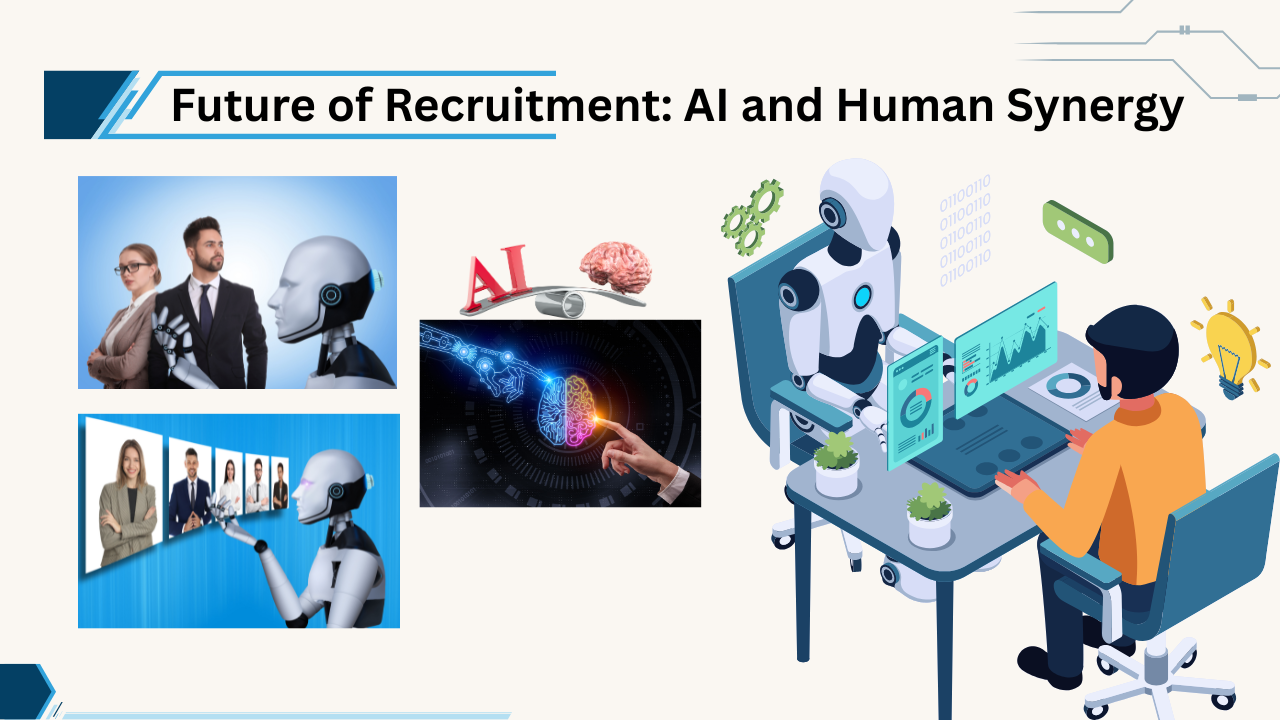
As artificial intelligence (AI) continues to transform how organizations find, evaluate, and hire talent, the recruitment sector is undergoing a significant transition. Organizations are using AI hiring tools more frequently in 2026 to expedite hiring decisions, enhance candidate experience, and streamline recruitment procedures. But even with the pace of technological development, human recruiters remain necessary for strategic decision-making, relationship-building, and emotional intelligence.
The development of a harmonious collaboration between humans and AI recruitment is the key to the future of HR technology, not the replacement of recruiters by robots. Businesses can combine empathy, communication, and cultural awareness with speed, efficiency, and data-driven insights thanks to this synergy.
By automating time-consuming and repetitive procedures, AI in recruitment has completely changed the employment process. Recruiters no longer have to spend hours setting up interviews or manually reviewing hundreds of applicants. These activities can now be completed in a matter of minutes by AI-powered systems, greatly shortening the hiring process.
Resume screening is one of the most effective uses of AI hiring technologies. AI-based application tracking systems (ATS) evaluate resumes based on predetermined standards, including education, experience, abilities, and keywords. This reduces manual labor and enables recruiters to find qualified prospects more rapidly.
Candidate sourcing is also being improved by AI. In order to find possible applicants who meet job requirements, modern recruitment platforms use machine learning algorithms to search talent databases, professional networking sites, and job portals. By identifying applicants who are more likely to succeed in particular roles, predictive analytics helps companies even more.
Virtual assistants and chatbots are now frequently used in hiring processes. These systems respond to questions from candidates, carry out initial evaluations, set up interviews, and offer application updates around-the-clock. This strengthens the applicant experience overall and facilitates better communication.
During initial screening interviews, AI-powered video interview platforms can assess facial expressions, communication style, and voice patterns. These technologies help businesses handle large-scale employment more effectively, even if they are still in the early stages of development.
Data-driven decision-making is another significant advantage of AI in hiring. AI systems examine hiring success rates, candidate engagement, time-to-hire, and cost-per-hire. This data helps to improve personnel planning and hiring strategies.
Artificial intelligence (AI) provides speed and efficiency, but it cannot totally replace the emotional intelligence, judgment, and interpersonal communication skills that human recruiters contribute. AI and human recruiters work together to make the hiring process more efficient and well-rounded.
Increased efficiency is a key benefit of an AI partnership. Recruiters may concentrate on strategic duties like applicant engagement and relationship management while AI takes care of administrative duties like resume screening, interview scheduling, and data organization.
When assessing soft skills, personality traits, flexibility, leadership abilities, and cultural fit, human recruiters are essential. Since these factors necessitate contextual interpretation and emotional comprehension, AI systems find it challenging to evaluate them appropriately.
By emphasizing credentials and skills above personal traits, AI might also lessen unconscious prejudice during the first screening process. To validate moral hiring procedures and avoid algorithmic prejudice, human control is still required.
The candidate experience is also improved by working together with AI and recruiters. While recruiters give individualized encounters, career coaching, and emotional support throughout the hiring process, automated solutions offer prompt responses and frequent updates.
Improved recruiting accuracy is another significant advantage. Large volumes of recruitment data can be analyzed by AI algorithms to spot patterns and forecast candidate success; recruiters then use professional judgment and interviews to confirm these findings. Both hiring quality and employee retention are enhanced by this combination.
Several cutting-edge AI hiring tools are now essential to contemporary recruitment tactics as businesses adopt digital hiring.
Artificial intelligence is used by contemporary applicant tracking systems (ATS) to automate workflow management, candidate ranking, and resume parsing. These tools assist recruiters in finding qualified applicants fast and organizing applications effectively.
These days, AI chatbots are frequently used to interact with applicants. They provide real-time application updates, perform simple screening interviews, and respond to commonly asked inquiries. This reduces the workload for recruiters and enhances communication.
In order to predict candidate success, staff retention, and performance potential, predictive hiring technologies examine past recruitment data. Companies can use these insights to make better hiring decisions.
AI-powered video interview platforms may evaluate response patterns, vocal communication, confidence, and language competency. These tools are especially helpful for remote recruitment and large-scale hiring.
AI-driven assessment tools use automated testing methods to evaluate job-specific competencies, technical skills, and cognitive aptitude. Candidates can be objectively compared by employers using quantifiable performance data.
In order to facilitate smooth coordination between the sourcing, screening, interviewing, and onboarding processes, numerous multinational corporations are incorporating various AI hiring tools into unified recruitment ecosystems in 2026.
One of the most prevalent worries about AI in hiring is whether or not technology will eventually take the place of human recruiters. Even though AI is changing hiring procedures, total substitution is still unlikely.
Human connection, trust, negotiation, empathy, and relationship-building are all part of the recruitment process; it is not just a technological one. During job transitions, candidates frequently need emotional connection, certainty, and guidance, qualities that AI cannot truly offer.
Instead of taking the position of recruiters, AI is best seen as a support system. By offering data-driven insights, automating tedious operations, and increasing operational efficiency, it improves human decision-making. After that, recruiters may concentrate on higher-value tasks like candidate relationship management, workforce planning, company branding, and strategic recruiting.
AI-driven hiring decisions also raise ethical and legal issues. If algorithms are not adequately regulated, they may inadvertently reflect biases found in training data, producing discriminatory results. Therefore, human control is necessary to guarantee equity, openness, and adherence to employment laws.
Furthermore, hiring frequently entails complex decision-making based on interpersonal chemistry, team dynamics, corporate culture, and leadership potential. When assessing these intricate elements, human judgment is still crucial.
AI and recruiters will probably collaborate in a hybrid recruitment strategy in the future of HR technology. While human experts will provide emotional intelligence, ethical oversight, and individualized involvement, AI will continue to enhance efficiency and analytics.
The future of hiring will probably revolve around the cooperation of knowledgeable HR specialists and clever technologies. Businesses will have a competitive edge in luring and keeping top personnel if they successfully integrate AI efficiency with human expertise.
AI will keep developing in fields like automated applicant engagement, workforce analytics, and predictive hiring. Simultaneously, recruiters will pay more attention to employer branding, employee experience, diversity initiatives, and strategic leadership.
Transparent hiring procedures, ongoing recruiter training, and the application of ethical AI must be given top priority by organizations. Companies that successfully mix automation and human contact will create recruitment processes that are more robust and flexible.
By automating procedures, increasing productivity, and facilitating data-driven recruiting decisions, artificial intelligence is quickly changing the recruitment industry. AI hiring tools are becoming essential to contemporary HR operations, from chatbots and resume screening to predictive analytics and video interviews.
But the future of hiring won't be about human vs AI recruitment. Rather, the goal is to establish a cooperative relationship in which technology complements human qualities rather than replaces them. Achieving successful AI and human synergy is key to the future of HR technology.